Response to the National Strategy for Unpaid Carers 2026
VOICES ADFOCAD welcomes the publication of the National Strategy for Unpaid Carers and the recognition it gives to the contribution unpaid carers make to families, communities and public services across Wales. The priorities identified within the strategy reflect many of the challenges carers have been raising for years, including recognition, access to support, financial hardship, respite, mental health, young carers and involvement in care planning.
However, while the strategy contains many positive commitments, it is substantially stronger on ambition than accountability.
The central question for unpaid carers is not whether the strategy says the right things. The question is whether carers will experience meaningful improvements in their lives as a result of it.
The strategy outlines a wide range of actions, but contains very few measurable national outcomes against which carers, organisations and the public can objectively judge success. In many areas, delivery appears dependent on future plans, local reporting, surveys and organisational self-assessment rather than clear national standards and performance expectations.
For many unpaid carers, this is a significant concern.
Wales has had legal protections for carers since the introduction of the Social Services and Well-being (Wales) Act 2014. Yet carers continue to report delays in assessments, inconsistent access to support, insufficient respite, exclusion from decision-making and difficulties exercising their rights. The challenge has never been a lack of policy commitments. The challenge has been implementation.
Rights Must Be Enforceable
The strategy repeatedly refers to carers' rights and commits to ensuring those rights are upheld. However, it remains unclear what happens when public bodies fail to uphold those rights.
Unpaid carers need answers to important questions:
How will compliance with carers' rights be monitored?
How will breaches be identified?
What remedies will be available when rights are denied?
Who will be accountable when legal duties are not fulfilled?
Without clear accountability mechanisms, rights risk remaining aspirational rather than enforceable.
National Consistency Must Replace Postcode Variation
The strategy acknowledges continuing variation in support across Wales.
A carer's legal entitlement should not depend on where they live.
Welsh Government should publish nationally comparable performance information on:
Carers' needs assessments.
Waiting times.
Reassessments.
Support plans.
Access to respite.
Carer outcomes and satisfaction.
Transparency is essential if carers are to understand whether services are improving and whether public bodies are meeting their responsibilities.
Independent Scrutiny Must Be Strengthened
The strategy relies heavily on data produced by local authorities, health boards and delivery organisations. While this information is important, it cannot be the only measure of success.
VOICES ADFOCAD believes there is a strong case for independent national scrutiny of carers' rights and outcomes.
A dedicated thematic review should examine:
Access to carers' assessments.
Quality and effectiveness of support plans.
Access to respite.
Involvement in care planning.
Hospital discharge experiences.
Compliance with statutory duties.
Independent evidence is essential if carers are to have confidence that reported progress reflects lived reality.
Recognition Must Lead to Practical Change
Recognition is important, but recognition on its own does not improve carers' lives.
Unpaid carers need:
Timely assessments.
Meaningful support plans.
Financial security.
Flexible respite.
Improved mental health support.
Genuine involvement in decisions that affect them.
The strategy will only succeed if greater recognition leads to measurable improvements in these areas.
Co-production Must Mean Shared Power
The strategy places welcome emphasis on co-production and carer involvement.
However, consultation alone is not co-production.
Meaningful co-production requires unpaid carers to have influence over:
Implementation.
Monitoring.
Evaluation.
Service design.
Commissioning decisions.
National and regional governance.
Carers must have opportunities not only to contribute views, but also to challenge decisions and influence outcomes.
Key Questions for Welsh Government
What measurable national targets will be published for each of the seven priorities?
Who will be accountable if those targets are not achieved?
Will mandatory national standards and waiting-time expectations be introduced for carers' needs assessments?
How will Welsh Government ensure carers' legal rights are not undermined by local resource pressures?
What independent scrutiny arrangements will verify whether carers are experiencing real improvements?
How will Welsh Government measure whether unpaid carers are genuinely being treated as equal partners in care?
What additional financial support will be made available to address the economic impact of caring?
How will unmet need for respite be measured and reduced?
How will performance differencing between local authorities and health boards be publicly reported?
What formal mechanisms will allow unpaid carers to challenge failures in implementation between now and 2031?
Conclusion
VOICES ADFOCAD supports the overall ambition of the National Strategy for Unpaid Carers and welcomes the recognition it gives to the contribution unpaid carers make across Wales.
However, ambition alone will not improve carers' lives.
The success of this strategy will ultimately be measured not by the number of actions listed, but by whether unpaid carers experience faster access to support, stronger protection of their rights, improved wellbeing, greater financial security and a genuine voice in decisions affecting them.
For that reason, the next stage of implementation must be accompanied by clear targets, transparent reporting, independent scrutiny and meaningful accountability.
Unpaid carers have heard promises before. What they now need is evidence that change is happening.
Proud to announce that VOICES ADFOCAD has been selected as a finalist in the Elysian Awards 2027 - No One Left Behind category

Access to Elected Office Fund Wales
Are you a disabled person living in Wales who is thinking of standing for election in next years local government elections?
Disabled people remain underrepresented in Welsh political life.
The Access to Elected Office Fund Wales aims to change that by helping to remove practical barriers. It does this by covering the additional costs disabled candidates may face when standing for election. The fund is open to both political party candidates and independents.

Sarah Rees MS
Sarah Rees, MS for Pen y Bont Bro Morganwwg gives a speech to unpaid carers at the 2026 Cardiff and Vale Unpaid Carers Assembly
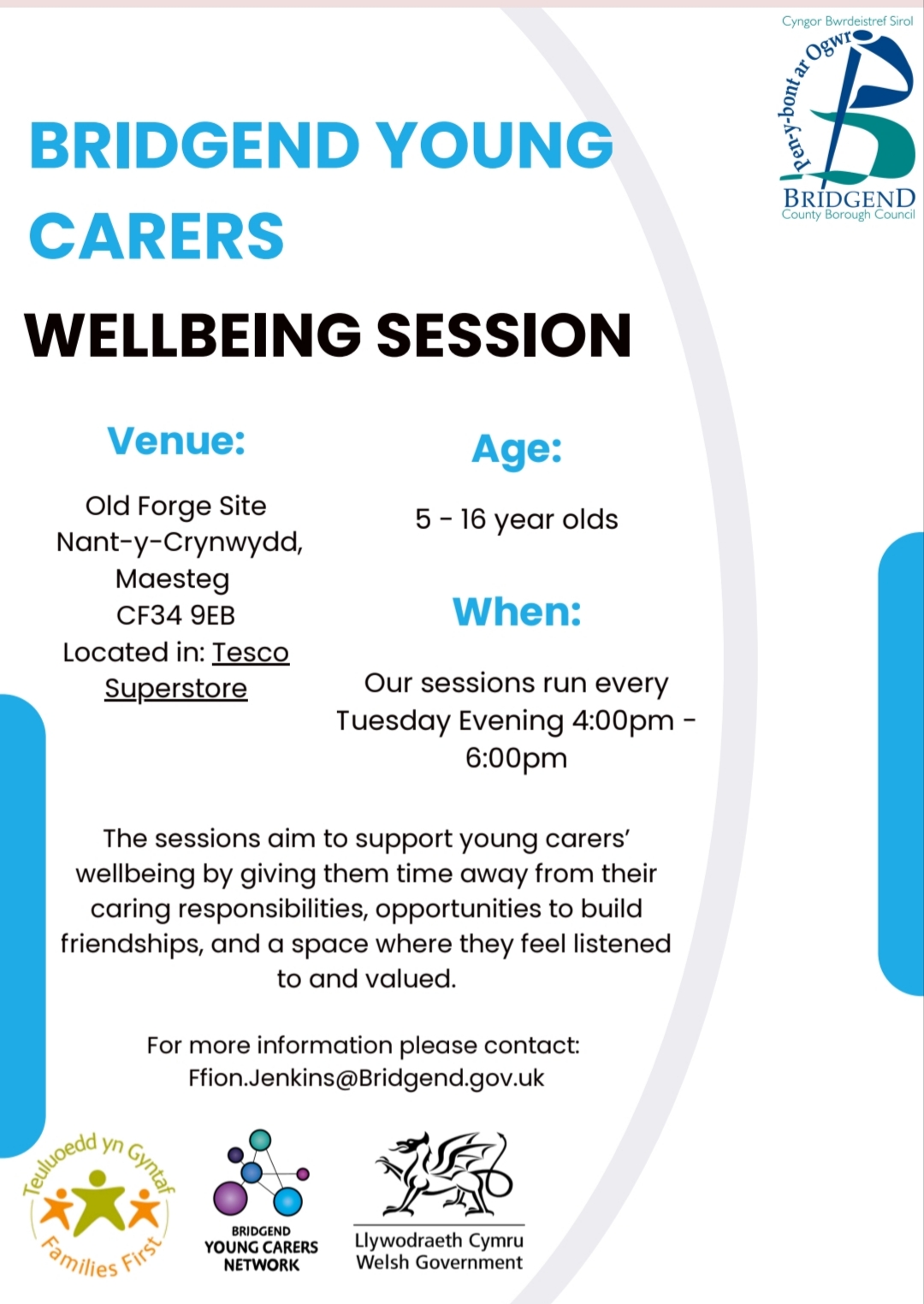
Wellbeing sessions for Young Carers in Brackla and Maesteg.

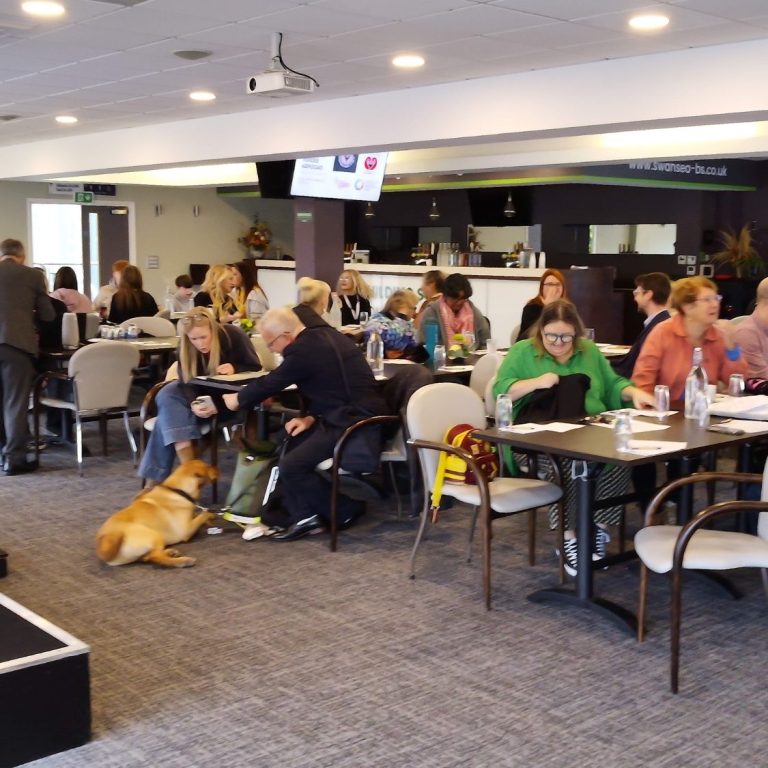
Unpaid carers across Cardiff and the Vale are coming together on 1 October to set priorities, challenge gaps, and push for better recognition.
Be part of the Unpaid Carers Assembly 2026 - your experience matters, and your voice drives the agenda.
Please be aware there are 3 ticket types, so please ensure you select the correct ticket type.
We will also be live-streaming the event for those who cannot attend in person and we will provide details of the livestream nearer to the time.
Event details:
Date: Thursday 1 October 2026
Time: 09:30–16:30
Venue: Sophia Gardens Cricket Ground, Cardiff
Register here.
Louise Brooks
Job title
The DWP has launched the Carer’s Allowance (CA) Call for Evidence. Please see the link here: Carer’s Allowance: call for evidence - GOV.UK.
The Call for Evidence seeks views and evidence on modernising CA and will remain open until 18 August.
Louise Brooks
Job title
A Carers Week Message From Sarah Rees MS
National Digital Protest - a united call for recognition, rights, and a secure future for unpaid carers
8 July at 12:00 noon, unpaid carers across the UK will come together for the country’s first ever National Digital Protest — a united call for recognition, rights, and a secure future.
For too long, unpaid carers have held families, communities, and the entire social care system together while remaining unseen and unheard. This protest changes that. It brings carers, the cared‑for, supporters, MPs, journalists, and decision‑makers into the same national moment — without travel, without barriers, and without risk.
This is not a meeting.
This is not a webinar.
This is a protest — built for carers, shaped by carers, powered by carers.
Whether you can stay for the full hour or only a few minutes, whether you join silently or speak through the Q&A, your presence counts. Every registration is a voice added to the national picture. Every attendee strengthens the demand for change.
Unpaid carers deserve visibility.
Unpaid carers deserve rights.
Unpaid carers deserve a secure future.
On 8 July, we stand together to say so — clearly, publicly, and at scale.
👉 Register now and be counted. Go to
www.nucuf.com for more information.
👉 Share the link with every carer you know. - https://www.nucuf.com/digiland.html
👉 Help build the largest digital action for carers the UK has ever seen.
NUCUF — Uniting unpaid carers for the recognition and secure future they deserve.
Collaboration Between VOICES ADFOCAD and NUCUF
VOICES ADFOCAD and the National Unpaid Carers Union & Forum (NUCUF) are proud to announce a new collaboration designed to strengthen the voice, power, and representation of unpaid carers and kinship carers across Wales and the UK.
This partnership brings together two peer‑led, lived‑experience organisations committed to the same core principle: those who live the reality of unpaid and kinship care must be at the centre of shaping the policies, systems, and decisions that affect their lives.
Why This Collaboration Matters
- Lived‑experience leadership - Both organisations are founded and led by carers, ensuring that national advocacy is grounded in real‑world experience rather than assumptions.
- Stronger national representation - Together, we will amplify the voices of carers who are too often unheard in policy spaces.
- Shared commitment to rights and accountability - Our collaboration strengthens efforts to close the gap between the rights set out in legislation and the daily reality of caring.
- Building a united movement - By aligning our work, we aim to support a more coordinated, confident, and visible carers’ movement across the UK.