VOICES ADFOCAD Statement in Support of Stolen Lives
VOICES ADFOCAD stands in solidarity with Stolen Lives and the families they represent following the recent Welsh Government stakeholder event on the future programme intended to replace the Learning Disability Ministerial Advisory Group.
We are deeply concerned by reports that Stolen Lives, a family-led campaign representing those directly affected by long-term detention, has not yet been offered a clear place within the programme's governance structures or invited to participate in the workstreams that are already underway.
This raises serious questions about the Welsh Government's commitment to genuine co-production.
Co-production is not consultation after decisions have been made. It is not asking people to comment on work that has already started. It means sharing power, shaping priorities together, and ensuring that those with lived experience are involved from the outset. If families whose loved ones have experienced restraint, seclusion, inappropriate detention, and institutionalisation are absent from the table, then the voices most affected by the system are being marginalised from the very reforms designed to address its failures.
Stolen Lives is uniquely placed to contribute to this work. Its members do not speak from theory or professional interest. They speak from lived reality. They know the impact of seeing a son, daughter, brother, sister, or parent taken hundreds of miles away from their home. They understand the trauma caused by prolonged detention, restrictive practices, family separation, and delayed discharge. Their expertise is not supplementary to this programme; it is fundamental to its success.
The moral authority of Stolen Lives comes from the experiences of the families who have lived through the consequences of a system that too often failed to listen. Any programme seeking to prevent inappropriate admissions and accelerate discharges cannot credibly claim to be person-centred or rights-based if those voices are excluded from its core structures.
VOICES ADFOCAD therefore calls on the Welsh Government to:
- Ensure Stolen Lives has formal representation within the programme's governance and decision-making structures.
- Provide transparency regarding the membership of the Programme Board and the four workstreams.
- Guarantee that family voices are represented across all relevant workstreams, not as observers but as equal partners.
- Demonstrate how principles of co-production are being embedded from the beginning rather than retrospectively applied.
- Publish clear mechanisms through which people with lived experience and family carers can influence decisions and hold the programme accountable.
The lessons of the past are clear. Decisions made about people without them rarely lead to meaningful change. If Wales is serious about ending inappropriate detention and building community-based alternatives, then families and those with lived experience must not simply be invited into the conversation. They must help lead it.
Nothing about us, without us, must be more than a slogan. It must become the foundation of how this work is designed, governed, and delivered.
VOICES ADFOCAD
Standing alongside unpaid carers, families, and people with lived experience to ensure their voices shape the policies and services that affect their lives.
Response to the Timms Review Final Report
Timms Review Final Report
The Timms Review concludes that PIP remains a highly valued benefit but that the current system is no longer fit for purpose and requires both immediate improvements and longer-term structural reform. The review gathered evidence from more than 40,000 individuals and organisations across the UK.
Key Themes
The report identifies consistent concerns that the current PIP process is:
- Stressful, adversarial and often experienced as dehumanising.
- Overly focused on what people cannot do rather than the barriers they face.
- Poor at recognising fluctuating conditions, cumulative impacts and hidden disabilities.
- Dependent on individuals' ability to navigate complex processes and gather evidence.
- Creating fear that work, volunteering, recovery or participation could lead to the loss of support.
The review strongly reaffirms that PIP should remain:
- A cash-based benefit.
- Non-means tested.
- Non-taxable.
- Available whether or not someone is in work.
Significant Recommendations
Immediate reforms include:
- Reduced reassessments for lifelong and degenerative conditions.
- Improved forms and guidance that better reflect fluctuating conditions.
- Independent advocacy support.
- Dedicated case management for those needing additional support.
- Better use of supporting evidence.
- Improved assessor training.
- Greater transparency and accountability.
- Clearer communication and reasonable adjustments.
- Increased digital access whilst maintaining non-digital routes.
Longer-term proposals include:
- A redesigned disability benefit centred on independent living.
- An assessment that looks at barriers, needs and extra costs.
- A "cash first" model with optional support services.
- A single digital profile using a "Tell Us Once" approach.
- Stronger links between benefits, services and local support.
Strengths
The review's strongest elements are:
- Its recognition of lived experience.
- Explicit protection of cash support.
- Rejection of conditionality.
- Endorsement of advocacy.
- Focus on dignity, trust and independent living.
- Recognition that participation, employment and volunteering should not be penalised.
Areas of Concern
Several issues warrant scrutiny:
The requirement to remain within OBR spending forecasts may constrain genuine reform.
References to "rebalancing" support and redesigning eligibility could result in some claimants losing support, although no detailed modelling is provided.
The proposed use of PIP as a gateway to other benefits raises risks for people whose needs do not fit redesigned eligibility criteria.
While advocacy is recommended, the report does not identify guaranteed funding or delivery mechanisms.
There is very limited reference to unpaid carers despite substantial evidence that carers help people navigate applications, provide evidence, manage awards and absorb gaps in public services.
Response to the Timms Review Final Report
VOICES ADFOCAD welcomes the publication of the Timms Review and its recognition that Personal Independence Payment remains an essential benefit but that the current system is failing many disabled people and people with long-term health conditions.
The review rightly acknowledges widespread experiences of stress, distrust, inaccessible processes and fear associated with claiming PIP. The emphasis on dignity, independent living, trust and co-production represents a significant shift in language and direction.
We particularly welcome the commitment to maintaining PIP as a non-means-tested cash benefit available regardless of employment status, alongside recommendations to improve support for fluctuating conditions, reduce unnecessary reassessments and strengthen access to advocacy. These are longstanding concerns raised by disabled people, unpaid carers and advocacy organisations across the UK.
However, significant concerns remain.
The review repeatedly states that reforms must remain within existing spending forecasts while simultaneously proposing a fundamental redesign of eligibility and support. Without transparent impact assessments and robust protections, there is a real risk that future reforms could redistribute support away from some disabled people under the banner of "rebalancing". Any reform must be judged by whether it improves people's lives, not solely by whether it remains within predetermined financial limits.
We are also concerned that unpaid carers are largely absent from the report's recommendations. Whilst carers are recognised as contributors to the evidence base and as people who frequently support individuals through the PIP process, the review fails to properly examine the consequences of reform for unpaid carers or the significant economic and social contribution they make.
For many families, PIP is not simply an individual benefit. It is a cornerstone of wider support arrangements and often underpins caring relationships, access to Carer's Allowance, transport, participation and independent living. Any reform that changes eligibility or assessment criteria must fully consider impacts on unpaid carers and involve carers directly in future co-production and implementation work.
VOICES ADFOCAD calls on the Government to:
- Accept the review's recommendations on advocacy, reassessment reform and improved treatment of fluctuating conditions.
- Publish full equality and impact assessments before introducing any eligibility changes.
- Guarantee that no disabled person loses support as a result of transitional reforms.
- Recognise unpaid carers as key partners within the disability support system.
- Ensure future implementation is co-produced not only with disabled people but also with unpaid carers and their representative organisations.
- Invest in wider health, social care and community services so that PIP reform is not expected to compensate for failures elsewhere in the system.
The test of this review will not be the quality of its language but whether people experience meaningful change in their everyday lives. Disabled people and unpaid carers have been promised reform before. Government must now demonstrate that dignity, trust and independent living are more than aspirations and become realities in practice.
Response to the Milburn Review with a focus on Young Carers
For perhaps the first time in a major government-backed review, young carers are explicitly recognised as a priority cohort rather than a footnote.
The review acknowledges that caring responsibilities are a significant barrier to education, employment and participation, particularly for young women. It also recognises that many young carers possess substantial skills and responsibilities that are often invisible to employers.
The review also proposes:
- Priority cohort planning for carers within the new Youth Opportunity Service (YOS).
- Support for caring responsibilities under the proposed Support Guarantee.
- Recognition that unpaid caring can be a major reason why young people become NEET.
- A personalised participation plan intended to identify barriers such as caring responsibilities.
These are important advances.
Where the review falls short
The review repeatedly describes caring responsibilities as a barrier to employment, but rarely asks why young people are providing that care in the first place.
Its central assumption is that the answer is to move more young people into employment, education or training. Yet for many young carers, the real issue is not unemployment. It is:
- Inadequate social care.
- Insufficient respite.
- Lack of practical support.
- Failure to identify carers early.
- Families being left to fill gaps in public services.
The review seeks to fix the consequence of caring rather than the cause.
The biggest omission
For anyone working in carers' rights, the most striking omission is the near-total absence of discussion about carers' rights and statutory support.
There is no substantial discussion of:
- Young Carers' Needs Assessments.
- Young Adult Carers' rights.
- How social care failures create caring responsibilities.
- The role of unpaid carers in sustaining health and social care systems.
- How assessments should trigger support before caring impacts education or employment.
In effect, carers appear mainly as recipients of employment support rather than citizens with rights.
Concerns about the welfare proposals
Many unpaid carers will also be concerned by proposals that increase obligations on young people to engage in participation plans or risk losing benefits.
The report argues for a stronger "duty to engage" and sanctions where engagement is persistently refused.
The concern is obvious:
If a young person is providing substantial care because statutory services have failed to meet need, should they really face pressure to enter employment before adequate replacement support is available?
The review does not adequately answer that question.
Overall judgement
The report is strongest when it identifies system failure and weakest when it discusses carers.
It correctly diagnoses that too many young people are excluded from work and education, but it does not fully understand that many unpaid carers are not outside employment because they lack opportunity. They are outside employment because they are already doing essential work that public services have failed to provide.
For carers' organisations, the challenge now is to ensure that any future response moves beyond "getting carers into work" and starts with "making sure carers receive the support they are entitled to".
Ultimately, the review views caring primarily as a barrier to employment. A carers' rights approach would view caring as a contribution to society that must be recognised, valued and properly supported. Until that shift is made, the report risks treating unpaid carers as part of the problem rather than part of the solution.
Response to the National Strategy for Unpaid Carers 2026
VOICES ADFOCAD welcomes the publication of the National Strategy for Unpaid Carers and the recognition it gives to the contribution unpaid carers make to families, communities and public services across Wales. The priorities identified within the strategy reflect many of the challenges carers have been raising for years, including recognition, access to support, financial hardship, respite, mental health, young carers and involvement in care planning.
However, while the strategy contains many positive commitments, it is substantially stronger on ambition than accountability.
The central question for unpaid carers is not whether the strategy says the right things. The question is whether carers will experience meaningful improvements in their lives as a result of it.
The strategy outlines a wide range of actions, but contains very few measurable national outcomes against which carers, organisations and the public can objectively judge success. In many areas, delivery appears dependent on future plans, local reporting, surveys and organisational self-assessment rather than clear national standards and performance expectations.
For many unpaid carers, this is a significant concern.
Wales has had legal protections for carers since the introduction of the Social Services and Well-being (Wales) Act 2014. Yet carers continue to report delays in assessments, inconsistent access to support, insufficient respite, exclusion from decision-making and difficulties exercising their rights. The challenge has never been a lack of policy commitments. The challenge has been implementation.
Rights Must Be Enforceable
The strategy repeatedly refers to carers' rights and commits to ensuring those rights are upheld. However, it remains unclear what happens when public bodies fail to uphold those rights.
Unpaid carers need answers to important questions:
How will compliance with carers' rights be monitored?
How will breaches be identified?
What remedies will be available when rights are denied?
Who will be accountable when legal duties are not fulfilled?
Without clear accountability mechanisms, rights risk remaining aspirational rather than enforceable.
National Consistency Must Replace Postcode Variation
The strategy acknowledges continuing variation in support across Wales.
A carer's legal entitlement should not depend on where they live.
Welsh Government should publish nationally comparable performance information on:
Carers' needs assessments.
Waiting times.
Reassessments.
Support plans.
Access to respite.
Carer outcomes and satisfaction.
Transparency is essential if carers are to understand whether services are improving and whether public bodies are meeting their responsibilities.
Independent Scrutiny Must Be Strengthened
The strategy relies heavily on data produced by local authorities, health boards and delivery organisations. While this information is important, it cannot be the only measure of success.
VOICES ADFOCAD believes there is a strong case for independent national scrutiny of carers' rights and outcomes.
A dedicated thematic review should examine:
Access to carers' assessments.
Quality and effectiveness of support plans.
Access to respite.
Involvement in care planning.
Hospital discharge experiences.
Compliance with statutory duties.
Independent evidence is essential if carers are to have confidence that reported progress reflects lived reality.
Recognition Must Lead to Practical Change
Recognition is important, but recognition on its own does not improve carers' lives.
Unpaid carers need:
Timely assessments.
Meaningful support plans.
Financial security.
Flexible respite.
Improved mental health support.
Genuine involvement in decisions that affect them.
The strategy will only succeed if greater recognition leads to measurable improvements in these areas.
Co-production Must Mean Shared Power
The strategy places welcome emphasis on co-production and carer involvement.
However, consultation alone is not co-production.
Meaningful co-production requires unpaid carers to have influence over:
Implementation.
Monitoring.
Evaluation.
Service design.
Commissioning decisions.
National and regional governance.
Carers must have opportunities not only to contribute views, but also to challenge decisions and influence outcomes.
Key Questions for Welsh Government
What measurable national targets will be published for each of the seven priorities?
Who will be accountable if those targets are not achieved?
Will mandatory national standards and waiting-time expectations be introduced for carers' needs assessments?
How will Welsh Government ensure carers' legal rights are not undermined by local resource pressures?
What independent scrutiny arrangements will verify whether carers are experiencing real improvements?
How will Welsh Government measure whether unpaid carers are genuinely being treated as equal partners in care?
What additional financial support will be made available to address the economic impact of caring?
How will unmet need for respite be measured and reduced?
How will performance differencing between local authorities and health boards be publicly reported?
What formal mechanisms will allow unpaid carers to challenge failures in implementation between now and 2031?
Conclusion
VOICES ADFOCAD supports the overall ambition of the National Strategy for Unpaid Carers and welcomes the recognition it gives to the contribution unpaid carers make across Wales.
However, ambition alone will not improve carers' lives.
The success of this strategy will ultimately be measured not by the number of actions listed, but by whether unpaid carers experience faster access to support, stronger protection of their rights, improved wellbeing, greater financial security and a genuine voice in decisions affecting them.
For that reason, the next stage of implementation must be accompanied by clear targets, transparent reporting, independent scrutiny and meaningful accountability.
Unpaid carers have heard promises before. What they now need is evidence that change is happening.
Proud to announce that VOICES ADFOCAD has been selected as a finalist in the Elysian Awards 2027 - No One Left Behind category

Access to Elected Office Fund Wales
Are you a disabled person living in Wales who is thinking of standing for election in next years local government elections?
Disabled people remain underrepresented in Welsh political life.
The Access to Elected Office Fund Wales aims to change that by helping to remove practical barriers. It does this by covering the additional costs disabled candidates may face when standing for election. The fund is open to both political party candidates and independents.

Sarah Rees MS
Sarah Rees, MS for Pen y Bont Bro Morganwwg gives a speech to unpaid carers at the 2026 Cardiff and Vale Unpaid Carers Assembly
Wellbeing sessions for Young Carers in Brackla and Maesteg.


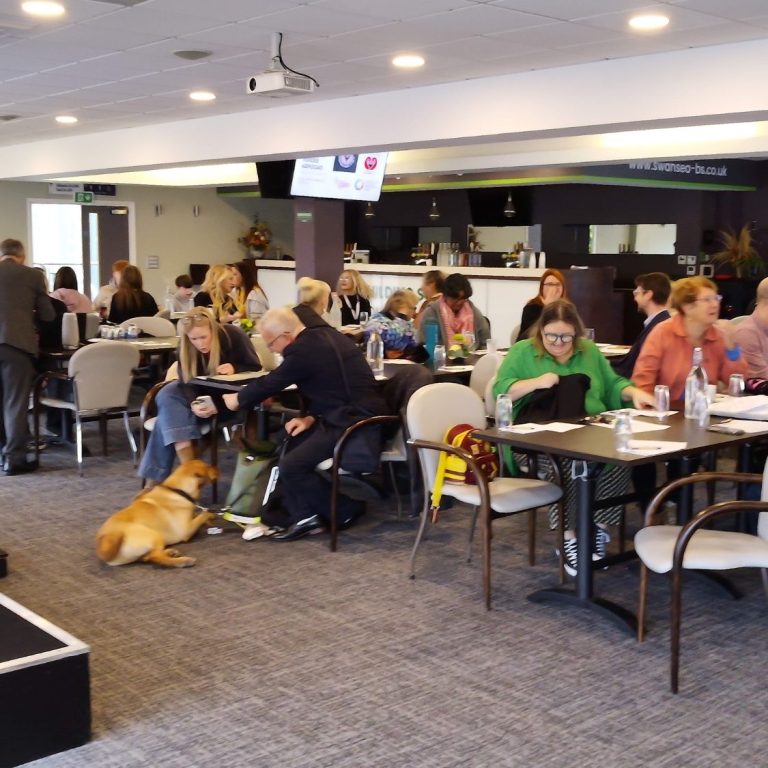
Unpaid carers across Cardiff and the Vale are coming together on 1 October to set priorities, challenge gaps, and push for better recognition.
Be part of the Unpaid Carers Assembly 2026 - your experience matters, and your voice drives the agenda.
Please be aware there are 3 ticket types, so please ensure you select the correct ticket type.
We will also be live-streaming the event for those who cannot attend in person and we will provide details of the livestream nearer to the time.
Event details:
Date: Thursday 1 October 2026
Time: 09:30–16:30
Venue: Sophia Gardens Cricket Ground, Cardiff
Register here.
Louise Brooks
Job title

The DWP has launched the Carer’s Allowance (CA) Call for Evidence. Please see the link here: Carer’s Allowance: call for evidence - GOV.UK.
The Call for Evidence seeks views and evidence on modernising CA and will remain open until 18 August.
Louise Brooks
Job title
A Carers Week Message From Sarah Rees MS
National Digital Protest - a united call for recognition, rights, and a secure future for unpaid carers
8 July at 12:00 noon, unpaid carers across the UK will come together for the country’s first ever National Digital Protest — a united call for recognition, rights, and a secure future.
For too long, unpaid carers have held families, communities, and the entire social care system together while remaining unseen and unheard. This protest changes that. It brings carers, the cared‑for, supporters, MPs, journalists, and decision‑makers into the same national moment — without travel, without barriers, and without risk.
This is not a meeting.
This is not a webinar.
This is a protest — built for carers, shaped by carers, powered by carers.
Whether you can stay for the full hour or only a few minutes, whether you join silently or speak through the Q&A, your presence counts. Every registration is a voice added to the national picture. Every attendee strengthens the demand for change.
Unpaid carers deserve visibility.
Unpaid carers deserve rights.
Unpaid carers deserve a secure future.
On 8 July, we stand together to say so — clearly, publicly, and at scale.
👉 Register now and be counted. Go to
www.nucuf.com for more information.
👉 Share the link with every carer you know. - https://www.nucuf.com/digiland.html
👉 Help build the largest digital action for carers the UK has ever seen.
NUCUF — Uniting unpaid carers for the recognition and secure future they deserve.
Collaboration Between VOICES ADFOCAD and NUCUF
VOICES ADFOCAD and the National Unpaid Carers Union & Forum (NUCUF) are proud to announce a new collaboration designed to strengthen the voice, power, and representation of unpaid carers and kinship carers across Wales and the UK.
This partnership brings together two peer‑led, lived‑experience organisations committed to the same core principle: those who live the reality of unpaid and kinship care must be at the centre of shaping the policies, systems, and decisions that affect their lives.
Why This Collaboration Matters
- Lived‑experience leadership - Both organisations are founded and led by carers, ensuring that national advocacy is grounded in real‑world experience rather than assumptions.
- Stronger national representation - Together, we will amplify the voices of carers who are too often unheard in policy spaces.
- Shared commitment to rights and accountability - Our collaboration strengthens efforts to close the gap between the rights set out in legislation and the daily reality of caring.
- Building a united movement - By aligning our work, we aim to support a more coordinated, confident, and visible carers’ movement across the UK.